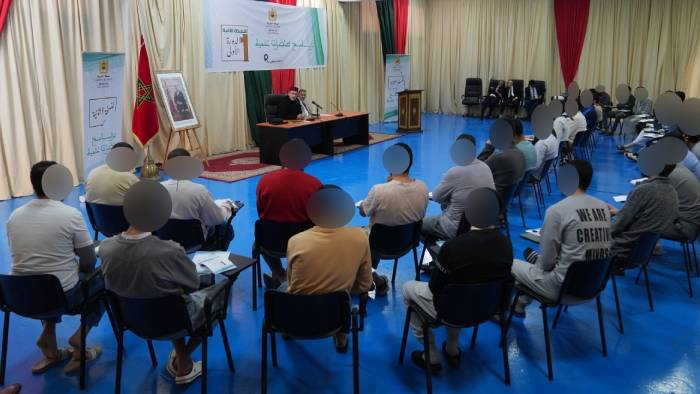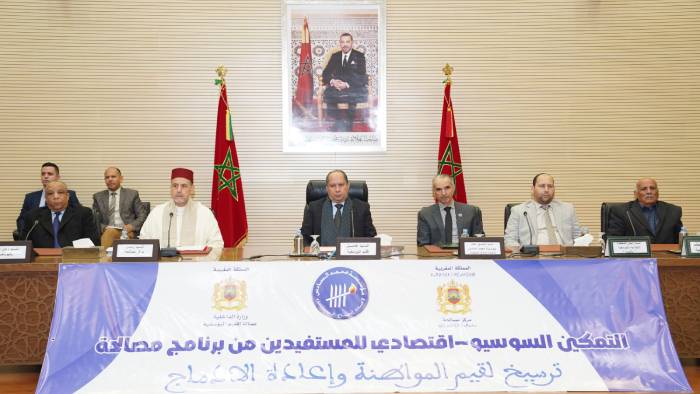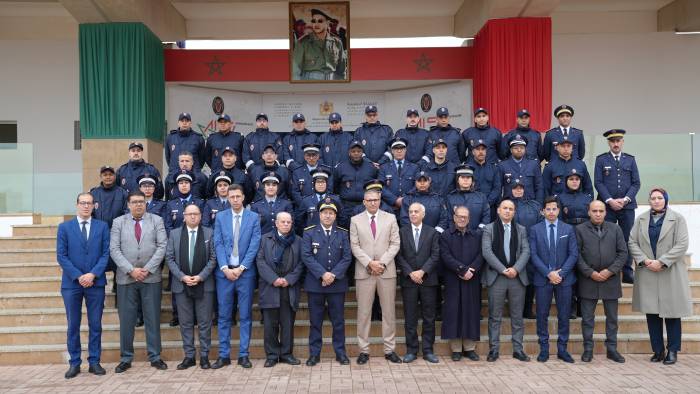
The DGAPR in cooperation with the Moussalaha Center, officially launched on Tuesday, March 3, 2026, at the National Institute for Staff Training in Tiflet, the program “Immunization Against Violent Extremism and Terrorism through Peer Education.”
The program targets inmates convicted in common law cases and is part of an integrated strategy aimed at consolidating the foundations of positive reintegration and strengthening the protection of the prison environment.
The second edition was launched in light of the positive results achieved by the first edition, which enabled the training of 48 staff members and the preparation of 240 inmates as peer educators across several correctional institutions. A total of 22,015 inmates benefited from various educational and awareness activities, confirming the effectiveness of the peer education approach and its positive impact in safeguarding the prison environment against the risks of extremist recruitment.
The current edition seeks to consolidate previous achievements and broaden the scope of beneficiaries through:
- Training 70 new staff members representing 12 correctional institutions, equipping them with theoretical, methodological, and practical knowledge related to violent extremism and terrorism, including understanding its underlying contexts, deconstructing its discourse, and identifying prevention mechanisms. This will be achieved through intensive training sessions combining academic instruction, practical exercises, and case studies.
- Preparing 360 inmates from 12 correctional institutions to serve as “peer educators,” by providing them with communication, cognitive, and behavioral skills enabling them to conduct awareness and educational activities among fellow inmates and promote tolerance, non-violence, citizenship, and peaceful coexistence.
- Enabling peer educators to implement awareness and educational programs for other inmates, with an additional estimated 24,000 inmates expected to benefit from the various components of the program, thereby contributing to the creation of a prison environment grounded in intellectual openness and the promotion of moderation and tolerance.
The program is supervised by a group of experts and academics specialized in analyzing and deconstructing extremist discourse and in intellectual rehabilitation. Its various components will be implemented throughout the current year according to a structured timeline ensuring continuous monitoring, evaluation, and assessment.